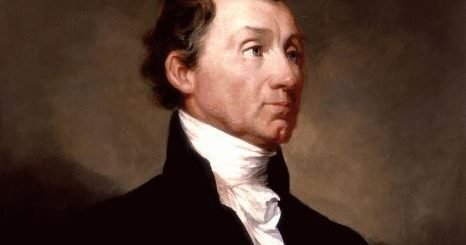
US President William Howard Taft Timeline
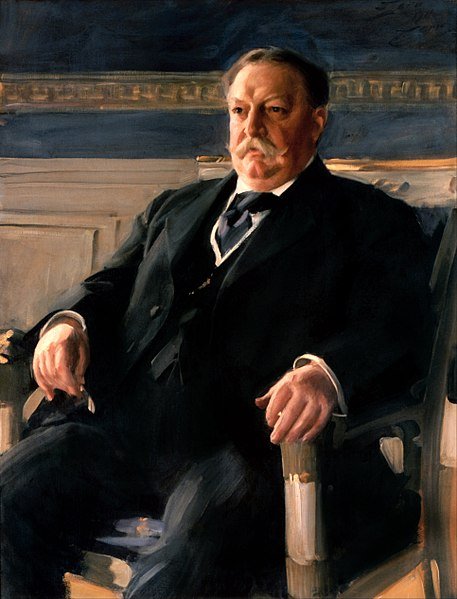
William Howard Taft timeline
Wrestler. Solicitor General. Appeal Court Judge. Peace activist. 27th President of the United States. 10th Chief Justice of the United States. The article below takes a chronological look at the major events in the life of William Howard Taft, 27th President of the United States (1909 – 1913) and later 10th Chief Justice of the United States (1921-1930).
1857: Born: Cincinnati, Ohio on September 15
1874: Begins his studies at Yale College
1878: Graduates second in his class from Yale
1880: Earns a Bachelor of Laws from Cincinnati Law School and proceeds to take the bar exams in Columbus, Ohio
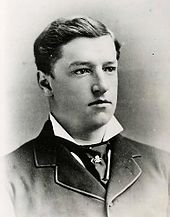
The young William Howard Taft at Yale College
January 1881 – January, 1882: Works as an assistant prosecutor for Hamilton County
1882–1883: Appointed Collector of Internal Revenue for Ohio’s First District by President Chester A. Arthur
1884: Backs the presidential bid of Republican Party presidential nominee James G. Blaine.
1887: Appointed to a position in Cincinnati Superior Court
1888: Gets re-elected to a five-year term in the Superior Court of Cincinnati
1886: Marries Helen Herron (Nellie)
1890: Taft is appointed Solicitor General of the United States by President Benjamin Harrison
1892: Gets appointed as a judge to the US Court of Appeals Judge (1892-1900) by President Harrison
1896: Appointed dean and professor at the Cincinnati Law School
1901: President William McKinley appoints Taft Governor-General of the Philippines
1902: Turns down a seat in the Supreme Court because he believed that he had a lot more to do in the Philippines
1903: President Theodore Roosevelt appoints Taft Secretary of War
1904: Taft, as secretary of war, supervises the beginning stages of the construction of Panama Canal
1905: For the second time, Taft turns down a seat on the U.S. Supreme Court
1906: After the Cubans request for American support, Taft heads to Cuba and becomes the 1st Provisional Governor of Cuba for about 14 days
1907: Made a trip to the Philippines to attend the opening ceremony of the first Philippine Assembly
1908: Gets Republican Party nomination for president; James S. Sherman, a conservative New York politician, is chosen as his running mate

William Howard Taft timeline | A 1908 campaign poster featuring Taft and his running mate Sherman
1908: Wins the general election by defeating veteran Democratic Party politician William Jennings Bryan; Taft garnered 321 electoral votes against 162 pulled by Bryan
March 4, 1909: William Howard Taft is sworn into office as the 27th President of the United States; the ceremony was held in the Senate Chamber owing to bad winter conditions
1909: Visited Mexico to meet up with longtime dictator Porfirio Díaz
1910: Issue of tariffs is heavily discussed in Washington; Taft incurs the anger of the progressives in his party who think he is siding too much with the conservatives.
1911: His administration filed an antitrust lawsuit against U.S. Steel
1912: William Taft’s administration filed an antitrust lawsuit against International Harvester Company
1912: Sends American troops to occupy Nicaragua
1912: Gets re-nominated by the Republican National Convention for the 1912 presidential election
1912: The fall out between Roosevelt and Taft heightens as Roosevelt left the Republicans to establish the Progressive Party, dooming Taft’s chances in the general election
1912: Loses his bid for a second term in the White House; Taft was defeated by Woodrow Wilson
1913: Term in the White House comes to an end and departs for Yale College
1913: Elected president of the American Bar Association
1921: Confirmed by the Senate as the Chief Justice of the United States Supreme Court
1930: Died at his Washington home on March 8 after close to a decade long battle with intermittent illness. His body was laid to rest at the Arlington National Cemetery, Virginia.

William Howard Taft’s headstone at Arlington National Cemetery, Virginia.
FAQs about William Howard Taft
What was William Howard Taft best known for?
Taft is best known for being the 27th President of the United States (1909–1913) and later serving as the 10th Chief Justice of the Supreme Court (1921–1930), making him the only person to hold both offices.
What was Taft’s approach to the presidency?
He preferred judicial decision-making over political maneuvering, often deferring to Congress and struggling with the political aspects of leadership, unlike his predecessor, Theodore Roosevelt.
How did Taft’s policies differ from Theodore Roosevelt’s?
Taft was more conservative, favoring legalistic approaches to reform rather than Roosevelt’s aggressive progressivism. He pursued trust-busting but lacked Roosevelt’s charisma and public appeal.
What was the Payne-Aldrich Tariff, and why was it controversial?
This tariff law, passed in 1909, was meant to lower tariffs but ended up maintaining high rates, angering progressives who saw it as a betrayal of reform efforts.
How did Taft handle trust-busting?
Taft filed more antitrust lawsuits (over 90) than Roosevelt, including against U.S. Steel, which led to a rift between the two men.
What role did Taft play in the 1912 election?
Taft’s reelection campaign was weakened by a split in the Republican Party when Roosevelt ran as a Progressive, allowing Democrat Woodrow Wilson to win.
Why was Taft appointed Chief Justice?
President Warren G. Harding appointed him in 1921 due to his deep legal expertise and desire for judicial service, a role he considered his true calling.
What were Taft’s key contributions as Chief Justice?
He streamlined the court system, advocated for the construction of the Supreme Court building, and strengthened judicial authority.
How did Taft’s personality affect his presidency?
He was reserved, indecisive, and disliked the political spotlight, often struggling with the demands of executive leadership.
What was Taft’s stance on civil rights?
He held conservative views, opposing radical reforms and largely maintaining segregationist policies in federal employment.
What was Taft’s foreign policy approach?
He promoted “Dollar Diplomacy,” encouraging American investment abroad to bolster U.S. influence, particularly in Latin America and Asia.