Grover Cleveland: Top 9 Achievements
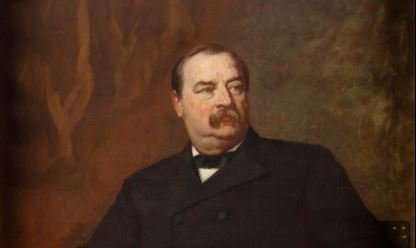
Accomplishments of 22nd and 24th U.S. President Grover Cleveland (1885–1889 and 1893–1897).
Grover Cleveland, a two non-consecutive term President of the United States of America, was a New York-born lawyer who holds the record of being the first Democrat to occupy the White House after the American Civil War. His terms as president were characterized by fiscal conservatism. He also had to grapple with the economic depression of 1893 (i.e. the Panic of 1893).
Praised for his honesty and principled approach to doing politics, he pushed for a host of reforms to arrest the economic crisis, most notably his repeal of the Sherman Silver Purchase Act of 1890. Cleveland waged war against political corruption and the patronage system. A fiscal conservative, Grover Cleveland’s non-consecutive terms as president meant that he was America’s 22nd (1885- 1889) and 24th (1893 – 1897) president.
The following discusses nine major accomplishments of Grover Cleveland, the first president to go two non-consecutive terms:
Elected Sheriff of Erie County, New York
Starting his political career in the Democratic Party, Cleveland tasted defeat in an attempt to become the District Attorney in 1865. However, he went on to get elected as the Sheriff of Erie County with a staggering 303 votes. He was sworn into office in January, 1871 at the age of 33.
Although the office was not the most beneficial for him politically, Cleveland got a lot of experience on the job. On two occasions, he even served as the executioner in a criminal case, executing Patrick Morrissey on September 6, 1872 and John Gaffney on February 14, 1873. Both men were convicted of murder. For this unpalatable acts, he came to be called the “Hangman of Buffalo”.
34th Mayor of Buffalo
After his Sheriff days, Cleveland contested and won a mayoral election against Milton C. Beebe. He was elected with 15,120 votes against 11,528 votes secured by Milton.
Cleveland was sworn into office on January 2, 1882 as the 34th Mayor of Buffalo. As mayor, he vetoed the street-cleaning bill because the Common Council had selected the highest bidder for the job. He considered this the “most bare-faced and shameless” act he had ever seen. His veto forced the council to pick the lowest bidder instead.

Cleveland’s early political career began when he was elected mayor of Buffalo in 1881 and later governor of New York in 1882. As governor, he worked closely with future president Theodore Roosevelt, then a state assembly leader, to implement reform policies, gaining national attention. Image: An early, undated photograph of Grover Cleveland
Governor of New York
Cleveland defeated Republican Charles J. Folger to become the 28th governor of New York. He won by a margin of about 200,000 votes. As New York governor, he fought against political corruption among state officials and the elites. Owing to his anti-corruption campaign and a plethora of vetoes, he even came into confrontations with Tammany Hall and its leader John Kelly.
He opposed state programs that he considered too lavish or in the special-privilege category. During his tenure, which was from 1883 to 1885, Cleveland helped pass a host of reforms that resulted in New York’s municipal governments functioning better and more efficiently.

Grover Cleveland facts and achievements. Portrait: Official portrait of U.S. President Grover Cleveland
Elected 22nd President of the United States
On July 7, 1884, the Democratic National Convention met in Chicago and nominated Grover Cleveland for President. With Thomas A. Hendricks as his running mate, Grover Cleveland went on to defeat Republican candidate James G. Blaine (former Speaker of the House) in the 1884 presidential election. Some factions from the Republican Party, including the “Mugwumps” and the Conklings, even supported Grover Cleveland’s candidacy. The “Mugwumps” were opposed to Republican presidential nominee Blaine, a man they described as very corrupt. Cleveland secured a narrow win over Blaine – 219 against Blaine’s 182 in the popular votes.
Grover Cleveland was the first Democrat to win the presidency after the Civil War, a period dominated by Republican administrations.
Grover Cleveland was sworn into the White House in 1885 as the 21st President of the United States. Everyone expected President Cleveland to continue with the various civil service reforms instituted by his predecessors such as Rutherford B. Hayes and Chester Arthur.

Grover Cleveland was the first Democrat elected after the Civil War and a prominent reformer known for his commitment to fiscal conservatism and limited government intervention.
Waged war against political corruption and the patronage system
Cleveland decided to keep well-performing Republicans in their federal jobs. He also promised not to appoint anyone based on his/her party affiliation.
Additionally, he tried to reduce the somewhat bloated civil service, thereby saving a lot of tax payers’ dollars. Basically, majority of his decisions and reforms in the civil service were guided by the principle of merit. For example, he vehemently opposed all Congressional bills that he considered too intrusive on state rights and extravagant in nature.
All in all, he used his veto powers about 584 times (that figure puts him only second to Franklin D. Roosevelt), including vetoing the Dependent Pension Bill of 1887 and the Texas Seed Bill. The latter bill was aimed at allowing the federal government disburse 10,000 seeds to drought-rocked farmers in Texas.
Helped secure the return of 81,000,000 acres of land
President Cleveland tasked his Secretary of the Interior Lucius Q.C. Lamar to ensure that western lands under government grant be returned to the federal government. This directive of his incurred the displeasure of several railroad investors. Regardless, the president was able to get back about 81,000,000 acres of land.
Nominated four Justices to the U.S. Supreme Court
His first term saw the nomination of two justices to the U.S. Supreme Court. The men were Lucius Q. C. Lamar, a former Secretary of the Interior, and Melville Fuller. Both were confirmed by the Senate with 32 to 28 and 41 to 20 respectively.
In addition to the Supreme Court Justices, President Cleveland nominated a total of 41 federal court judges.
His second term in office saw him nominate two more Justices to the Supreme Court. They were Senator Edward Douglass White of Louisiana and Rufus Wheeler Peckham. Both men got confirmed by the Senate very easily.

As president, Cleveland prioritized honesty, self-reliance, and integrity, winning praise for his resistance to political corruption and his dedication to classical liberal values. In his first term, he implemented reforms targeting government patronage and “bossism.” Image: Results of the 1888 Presidential Election
24th President of the United States
After his defeat in 1888 by Republican Benjamin Harrison (23rd President of the U.S.), Cleveland and his family moved to New York City. Cleveland worked in a law firm for the majority of the four years that he was not in Washington.
Although he was met by strong opposition from David B. Hill, Cleveland won the Democratic Party nomination and went on to defeat incumbent President Benjamin Harrison. Thus Cleveland became the first person in the history of the nation to get re-elected in this manner.
Cleveland won both the popular and electoral votes in an election that was a relatively somber event due to the death of Harrison’s wife, Caroline Harrison, two weeks before the election.
Halted the depletion of gold reserve in the Treasury
Cleveland’s second term in the White House was characterized by him trying to deal with the Panic of 1893. He also had to contend with the Silverates, who opposed scrapping the coinage provisions in the Sherman Silver Purchase Act. In the end, he was able to get the repeal across the line with a 48 to 37 votes. The repeal helped to prevent the nation’s gold reserves from depleting any further.
The Panic of 1893 triggered a national depression that eroded public confidence in his administration, leading to a landslide victory for Republicans in the 1894 congressional elections.
Other notable accomplishments of President Grover Cleveland

22nd and 24th U.S. President Grover Cleveland achievements
- In 1887, President Grover Cleveland signed an act that gave birth to the Interstate Commerce Commission. The commission, which came to be as a result of the Interstate Commerce Act of 1887, was established to regulate the railroad sector. The commission was thus the first regulatory authority in the United States. Cleveland hope the Commission bring some level of sanity and control the monopolistic tendencies of railroad operators.
- Cleveland also picked up from where his predecessor Chester A. Arthur left by investing a lot in the nation’s Navy. He worked brilliantly well with Secretary of the Navy William C. Whitney. Together, they faced out the old fleets of the U.S. Navy and brought in new ones.
- After Frederick Douglass resigned from his post as recorder of deeds in the nation’s capital, President Cleveland picked an African American by the name of James Campbell Matthews to fill the vacant position.
- Cleveland also pushed for the Dawes General Allotment Act of 1887 which facilitated the redistribution of Indian Reservation lands to individuals within the Native American community.
- He pushed for an amicable solution to the border dispute between Britain Guyana and Venezuela. He forced Great Britain to come to the negotiating table and comply with the verdict of the arbitration.
Read More:
Retirement and Death
His pursuit of a third term was met with strong opposition from the Silverites, who were in complete control of Democratic Party. Cleveland silently bowed out, retiring to his Westland Mansion in Princeton, New Jersey. He spent majority of his time in retirement working as a faculty member and then later a trustee in Princeton University.
On June 24, 1907, Grover Cleveland suffered a heart attack and passed away at the age of 71. He was buried at Princeton Cemetery of the Nassau Presbyterian Church.
Grover Cleveland is often described as the most conservative Democratic politician since the Civil War. Although his legacy is not as flamboyant as other more renowned U.S. presidents, he is often ranked in the upper half of best-performing U.S. Presidents of all time.
How did the donkey become the symbol of the Democratic Party?
Frequently Asked Questions about Grover Cleveland

Stephen Grover Cleveland was the 22nd and 24th President of the United States, notable as the only president to serve two non-consecutive terms (1885–1889 and 1893–1897).
How did Cleveland’s political career begin?
He began his political career at the local level as mayor of Buffalo in 1881, where he gained respect for his reform-oriented policies. His success in Buffalo led to his election as governor of New York in 1882, where he built a reputation for fighting corruption and advocating for honest governance.

Birthplace of Grover Cleveland: Caldwell Presbyterian parsonage, in Caldwell, New Jersey
What support did Cleveland receive from the “Mugwumps,” and why?
The “Mugwumps,” a group of Republicans disillusioned with their party, supported Cleveland in the 1884 presidential campaign due to his stance against corruption and patronage. Cleveland’s commitment to reform and integrity won their support, helping him secure the presidency.

President Cleveland’s tenure exemplified the values of the Bourbon Democrats—a faction that emphasized limited government, opposition to high tariffs, and resistance to free silver and subsidies for businesses, farmers, or veterans. Image: Cleveland’s first Cabinet (Front row, left to right): Thomas F. Bayard, Cleveland, Daniel Manning, Lucius Q. C. Lamar Back row, left to right: William F. Vilas, William C. Whitney, William C. Endicott, Augustus H. Garland
What were the core beliefs of the Bourbon Democrats, and how did Cleveland align with them?
The Bourbon Democrats, whom Cleveland represented, opposed high tariffs, inflationary policies like free silver, and subsidies to businesses, farmers, or veterans. Cleveland’s fiscal conservatism and emphasis on limited government intervention reflected these principles, shaping his policies as president.
What challenges did Cleveland face in the 1888 presidential election?

In the 1888 election, Cleveland won the popular vote but lost the electoral vote to Republican Benjamin Harrison, forcing him to leave office.
Despite this setback, he remained active in public life, practicing law in New York City and eventually returning to the presidency in 1892.

Despite winning the popular vote in the 1888 election, Cleveland lost the presidency to Benjamin Harrison due to the electoral vote. He returned to office in 1892, but his second term was marred by economic hardship.
How did Cleveland’s second term differ from his first, particularly with regard to economic issues?
Cleveland’s second term was marked by the Panic of 1893, a severe economic depression that created financial hardship and discontent. His response was characterized by conservative fiscal policies, including support for the gold standard, which alienated parts of his party that favored inflationary measures to aid indebted farmers.

President Cleveland’s last cabinet (Front row, left to right): Daniel S. Lamont, Richard Olney, Cleveland, John G. Carlisle, Judson Harmon Back row, left to right: David R. Francis, William Lyne Wilson, Hilary A. Herbert, Julius S. Morton
What impact did Cleveland’s handling of the 1894 Pullman Strike have on his popularity?
His decision to intervene in the 1894 Pullman Strike by deploying federal troops to maintain rail service angered labor unions and strained his relationship with working-class Democrats. His actions, aimed at preserving economic stability, contributed to his declining popularity among labor supporters.
What were Cleveland’s views on U.S. foreign policy, particularly concerning Hawaii?
He was a strong anti-imperialist who opposed the annexation of Hawaii following the 1893 coup against Queen Liliʻuokalani. He called for her restoration to the throne, believing that the United States should avoid expansionist policies, which contrasted with the imperialist views gaining popularity at the time.
How did Cleveland’s personal qualities contribute to his legacy, according to biographer Allan Nevins?
Biographer Allan Nevins highlighted Cleveland’s honesty, courage, firmness, independence, and common sense as qualities that made him a stable and trustworthy leader. Though Cleveland lacked some of the imaginative flair of his contemporaries, his adherence to these qualities solidified his reputation for integrity.
How did Cleveland continue to engage with public affairs after his presidency?
After leaving office in 1897, Cleveland remained involved in public affairs, serving as a trustee of Princeton University and occasionally expressing his views on political matters. He continued to uphold his principles and stayed engaged until his health declined in 1907.

After leaving office in 1897, Cleveland became a trustee of Princeton University and continued sharing his political views, though he largely receded from public life. Image: Grover Cleveland Postal Issues of 1931 & 1938
How do historians view Cleveland’s legacy, and where is he generally ranked among U.S. presidents?
Historians often view Cleveland’s legacy positively, commending him for his moral integrity, commitment to reform, and resistance to corruption. He is typically ranked in the middle to upper tier of U.S. presidents, respected for his adherence to classical liberalism and good governance.
What qualities are central to Cleveland’s legacy as a model of principled leadership?
Cleveland is remembered for prioritizing honesty, accountability, and integrity over political expediency, even when his decisions were unpopular. His presidency exemplifies principled leadership, valuing adherence to classical liberal ideals and good governance over short-term political gains.

Grover Cleveland passed away in 1908, leaving behind a legacy defined by his principles rather than party alignment. Today, Cleveland is remembered for his integrity, commitment to moral values, and bipartisan appeal, securing him a place in the middle to upper ranks of U.S. presidents in historical assessments. Image: A statue of Grover Cleveland outside City Hall in Buffalo, New York.